
一、Cover Letter的作用:不只是"走流程"
很多作者把Cover Letter当作投稿系统中一个可有可无的附件随便写几句应付。这是一个代价昂贵的误解。
Cover Letter的真实作用:
| 作用 | 说明 |
|---|---|
| 编辑看到的第一份材料 | 在打开论文之前,编辑先读Cover Letter |
| 影响是否送审 | 编辑据此判断论文是否值得进入审稿流程 |
| 传达论文无法体现的信息 | 如与已发表会议论文的关系、利益冲突声明等 |
| 展示作者的专业态度 | 一封好的Cover Letter体现学术素养 |
| 推荐/排除审稿人 | 部分期刊允许在Cover Letter中建议审稿人 |
哪些期刊/会议需要Cover Letter?
| 投稿类型 | 是否需要 | 说明 |
|---|---|---|
| SCI/SSCI期刊 | 几乎必须 | 投稿系统有专门的上传/填写区域 |
| EI期刊 | 多数需要 | 视期刊要求 |
| 顶级会议(CVPR/NeurIPS等) | 通常不需要 | 投稿系统中直接填写信息 |
| 一般会议 | 少数需要 | 看具体要求 |
| 会议论文扩展版投期刊 | 必须 | 需声明与会议版的关系 |
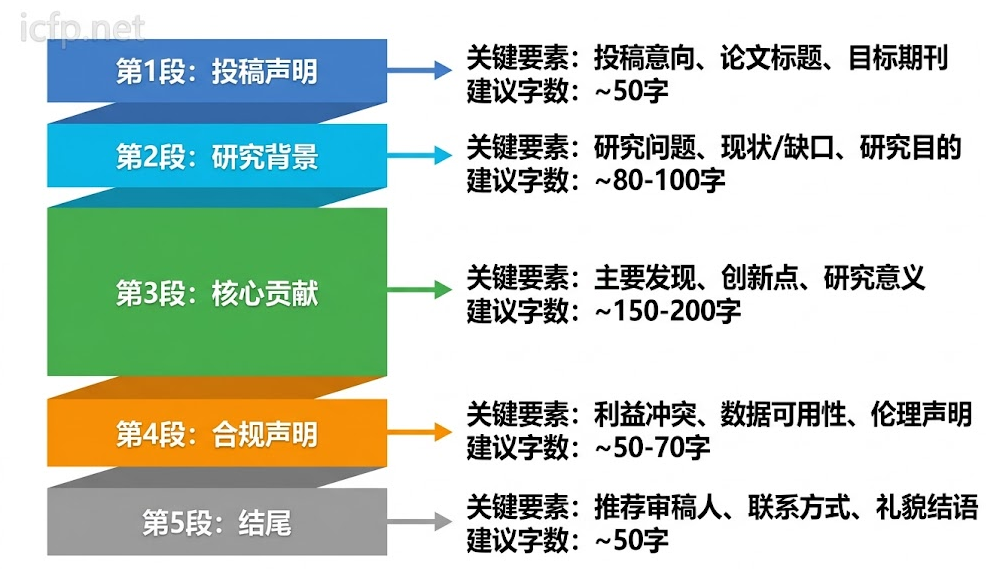
二、Cover Letter的标准结构
2.1 五段式结构(推荐)
第一段:投稿声明(投什么、投哪里)
第二段:研究背景与动机(为什么重要)
第三段:核心贡献与发现(论文亮点)
第四段:合规声明(原创性、无一稿多投等)
第五段:结尾(期待回复、联系方式)
2.2 各段要素详解
| 段落 | 必备内容 | 字数建议 |
|---|---|---|
| 第一段 | 论文标题、目标期刊名、投稿类型(Original Article/Review等) | 2-3句 |
| 第二段 | 研究问题的重要性、现有研究的不足 | 3-5句 |
| 第三段 | 核心发现/贡献(2-4个bullet point最佳) | 4-6句 |
| 第四段 | 原创性声明、无一稿多投、利益冲突、伦理声明 | 3-4句 |
| 第五段 | 感谢编辑考虑、通讯作者信息 | 2-3句 |
总长度控制: 一页以内(300-500词英文),不超过一页A4纸。
三、英文Cover Letter完整模板
模板一:标准期刊投稿(通用版)
Dear Editor-in-Chief / Dear Professor [Name],

We would like to submit the enclosed manuscript entitled
"[Full Paper Title]" for consideration for publication in
[Journal Name] as an Original Research Article.

[研究背景] The problem of [research topic] has attracted
significant attention due to [importance/application].
However, existing approaches suffer from [limitation 1]
and [limitation 2], which limit their effectiveness in
[specific scenario].

[核心贡献] In this manuscript, we propose [method/approach]
to address these challenges. Our key contributions include:
- [Contribution 1: e.g., A novel algorithm that achieves...]
- [Contribution 2: e.g., Theoretical analysis proving...]
- [Contribution 3: e.g., Extensive experiments on X datasets
  demonstrating Y% improvement over state-of-the-art]

[合规声明] We confirm that this manuscript has not been
published elsewhere and is not under consideration by
another journal. All authors have approved the manuscript
and agree with its submission to [Journal Name]. There are
no conflicts of interest to declare.

[结尾] We believe this work is well suited for the scope
and readership of [Journal Name]. Thank you for your time
and consideration. We look forward to hearing from you.

Sincerely,

[Corresponding Author Name]
[Title, Department]
[University/Institution]
[Email Address]
[ORCID (optional)]
模板二:会议论文扩展版投期刊
Dear Editor,

We would like to submit the manuscript entitled "[Title]"
for consideration in [Journal Name].

Declaration of Prior Publication:
A preliminary version of this work was published as a
conference paper:
[Authors], "[Conference Paper Title]," in Proc. [Conference],
[Year], pp. XX-XX. DOI: [DOI]

The current manuscript substantially extends the conference
version with approximately [X]% new content, including:
1. [New contribution 1]
2. [New contribution 2]
3. [New contribution 3]

[合规声明] Apart from the above-declared conference paper,
this manuscript has not been published elsewhere and is not
under consideration by another journal.

Thank you for your consideration.

Sincerely,
[Name and Contact Information]
模板三:建议/排除审稿人
[在标准模板的第四段后添加]

Suggested Reviewers:
1. Prof. [Name], [University], [Email]
   Reason: Expert in [relevant area]
2. Prof. [Name], [University], [Email]
   Reason: Published extensively on [topic]
3. Dr. [Name], [Institution], [Email]
   Reason: Leading researcher in [field]

Excluded Reviewers (due to potential conflicts of interest):
1. Prof. [Name], [University]
   Reason: Current collaborator / Same institution
四、中文Cover Letter模板(国内期刊)
模板:中文期刊投稿信
尊敬的《[期刊名称]》编辑部:

您好!

兹将我们的论文《[论文标题]》投稿至贵刊,恳请审阅。

[研究背景] [研究领域]是当前[学科]领域的重要研究方向。
然而,现有方法在[具体问题]方面仍存在[不足1]和[不足2]
等局限性。

[核心贡献] 本文针对上述问题,提出了[方法/方案],
主要贡献包括:
(1)[贡献1];
(2)[贡献2];
(3)[贡献3]。
实验结果表明,所提方法在[数据集/场景]上较现有最优方法
提升了[具体数据]。

[声明] 本文为原创性研究成果,未在其他期刊或会议上
发表或投稿,所有作者均同意投稿至贵刊,且不存在利益
冲突。

[基金信息] 本研究得到[基金名称](项目编号:XXXX)
的资助。

恳请编辑部予以审阅,期待您的回复。

此致
敬礼

通讯作者:[姓名]
单位:[完整单位名称]
电话:[联系电话]
邮箱:[电子邮箱]
日期:[年月日]
五、不同场景的Cover Letter要点
5.1 被拒后改投另一期刊
| 要点 | 说明 |
|---|---|
| 不需要提及被拒经历 | Cover Letter中不要说"被XX期刊拒了" |
| 按新期刊要求重新写 | 调整scope匹配度描述 |
| 如果做了修改可以提及 | "This revised version includes..." |
5.2 Major Revision后重新提交
Dear Editor,

We would like to resubmit our revised manuscript (Manuscript
ID: [ID号]) entitled "[Title]" to [Journal Name].

We have carefully addressed all comments from the reviewers.
A detailed point-by-point response is provided in the
attached Response Letter. Key revisions include:
- [Major change 1]
- [Major change 2]
- [Major change 3]

All changes in the manuscript are highlighted in [red/blue]
for easy identification.

Thank you for the opportunity to revise and resubmit.

Sincerely,
[Name]
5.3 推荐至Special Issue
Dear Guest Editor(s),

We would like to submit our manuscript "[Title]" for
consideration in the Special Issue on "[Special Issue Title]"
in [Journal Name].

This work is directly relevant to the special issue theme
because [1-2 sentences explaining relevance].

[其余按标准格式]
5.4 含伦理声明的投稿(涉及人体/动物实验)
[在合规声明段添加]

Ethical Statement: This study was approved by the
Institutional Review Board of [Institution] (Approval
No.: [编号]). Informed consent was obtained from all
participants. All procedures were conducted in accordance
with the Declaration of Helsinki.
六、10个高频错误与避坑指南
| 序号 | 错误 | 为什么是错 | 正确做法 |
|---|---|---|---|
| 1 | 期刊名写错/写了别的期刊名 | 明显是群发,编辑立刻反感 | 仔细核对期刊全称 |
| 2 | 编辑姓名写错 | 不尊重 | 查官网确认拼写,不确定就用"Dear Editor" |
| 3 | 只写"Please find attached..." 一句话 | 毫无信息量 | 按五段式完整写 |
| 4 | 长篇大论超过两页 | 编辑没时间读 | 控制在一页以内 |
| 5 | 复制粘贴论文Abstract当Cover Letter | 重复且没有针对性 | Cover Letter应补充Abstract没有的信息 |
| 6 | 夸大研究成果 | "groundbreaking""revolutionary" | 用数据说话,客观描述贡献 |
| 7 | 没有合规声明 | 编辑无法确认基本条件 | 必须包含原创性+无一稿多投声明 |
| 8 | 语法错误/拼写错误 | 第一印象极差 | 投稿前至少检查两遍 |
| 9 | 未说明与会议版的关系 | 如果有会议版却不声明=隐瞒 | 必须主动披露prior publication |
| 10 | 使用过于随意的语气 | "Hi there""Hey editor" | 保持正式学术语气 |
七、Cover Letter vs Abstract:区别在哪?
| 维度 | Abstract | Cover Letter |
|---|---|---|
| 读者 | 所有人(审稿人+读者) | 仅编辑 |
| 目的 | 概括论文全部内容 | 说服编辑送审 |
| 内容 | 背景-方法-结果-结论 | 为什么适合本期刊+核心亮点 |
| 是否包含声明 | 否 | 是(原创性/利益冲突等) |
| 是否推荐审稿人 | 否 | 可以 |
| 是否提及prior work关系 | 否 | 必须(如有) |
| 语气 | 客观学术 | 客观但略有说服力 |
核心区别: Abstract告诉读者"论文讲了什么",Cover Letter告诉编辑"为什么这篇论文值得在您的期刊上发表"。
八、提升Cover Letter说服力的技巧
8.1 匹配期刊Scope
在Cover Letter中明确说明论文与期刊定位的匹配:
强:"This work aligns with [Journal]'s recent focus on
[specific topic], as evidenced by the special issue on
[topic] (Vol. XX, 2025) and several recent publications
in this area [citations]."

弱:"We think this paper is suitable for your journal."
8.2 量化你的贡献
强:"Our method achieves 94.2% accuracy, outperforming the
current state-of-the-art by 4.5 percentage points on the
standard benchmark."

弱:"Our method performs better than existing methods."
8.3 突出时效性/影响力
"This work addresses the timely challenge of [topic], which
has seen growing interest with [X] related papers published
in the past year alone."
8.4 适当提及潜在影响
"We anticipate that this work will be of interest to
researchers in [field A] and [field B], and may have
practical implications for [application area]."
九、审稿人推荐的写法与策略
9.1 推荐审稿人的原则
| 原则 | 说明 |
|---|---|
| 确实是该领域专家 | 有相关方向的高质量发表 |
| 非直接合作者 | 近3-5年无共同发表/项目 |
| 非同一单位 | 避免利益关系 |
| 推荐3-5人 | 编辑通常需要备选 |
| 国际化 | 不要全部来自同一国家/地区 |
9.2 排除审稿人的合理理由
| 合理理由 | 不合理理由 |
|---|---|
| 近期合作者/同单位 | "他可能不喜欢我的工作" |
| 有公开学术争议/对立 | "他以前拒过我的论文" |
| 已知存在利益冲突 | "他是竞争对手" |
| 与论文有直接竞争关系 | 无具体理由的排除 |
十、总结
Cover Letter的核心公式:
我是谁 + 投什么 → 为什么重要 →
核心贡献(量化)→ 合规声明 → 期待回复
三个"必须":
- 必须针对目标期刊定制(体现scope匹配)
- 必须包含合规声明(原创性+无一稿多投)
- 必须简洁有力(一页以内,不超过500词)
三个"不要":
- 不要复制粘贴Abstract充当Cover Letter
- 不要使用夸张/空洞的形容词
- 不要群发模板忘改期刊名(最致命错误)
一封好的Cover Letter不会让差论文被录用,但一封差的Cover Letter可能让好论文在编辑台就被冷落。花20分钟写好Cover Letter,是对数月研究工作最好的"最后一公里"保障。
上一篇
山东大学,迎来两位新任副校长
热门头条

2026年科学探索奖获奖名单公布
- 19
- 发布时间:2026.08.24
第十九届前沿计算机理论与工程国际会议(ICACTE 2026)在杭州举行
- 13
- 发布时间:2026.08.24
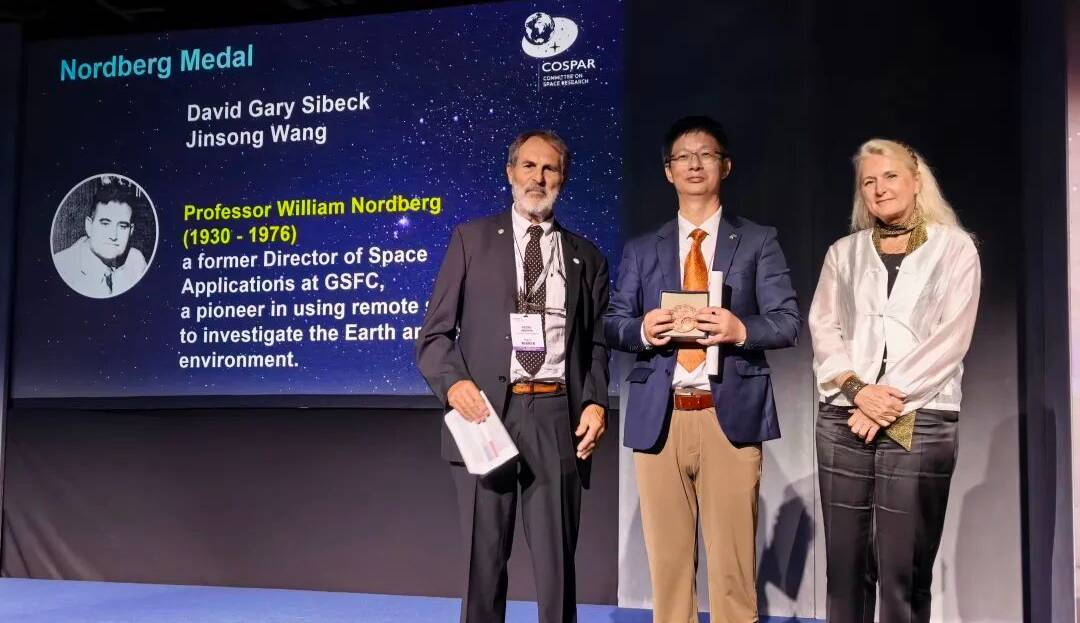
中国首位!新晋院士候选人,获国际大奖
- 174
- 发布时间:2026.08.06
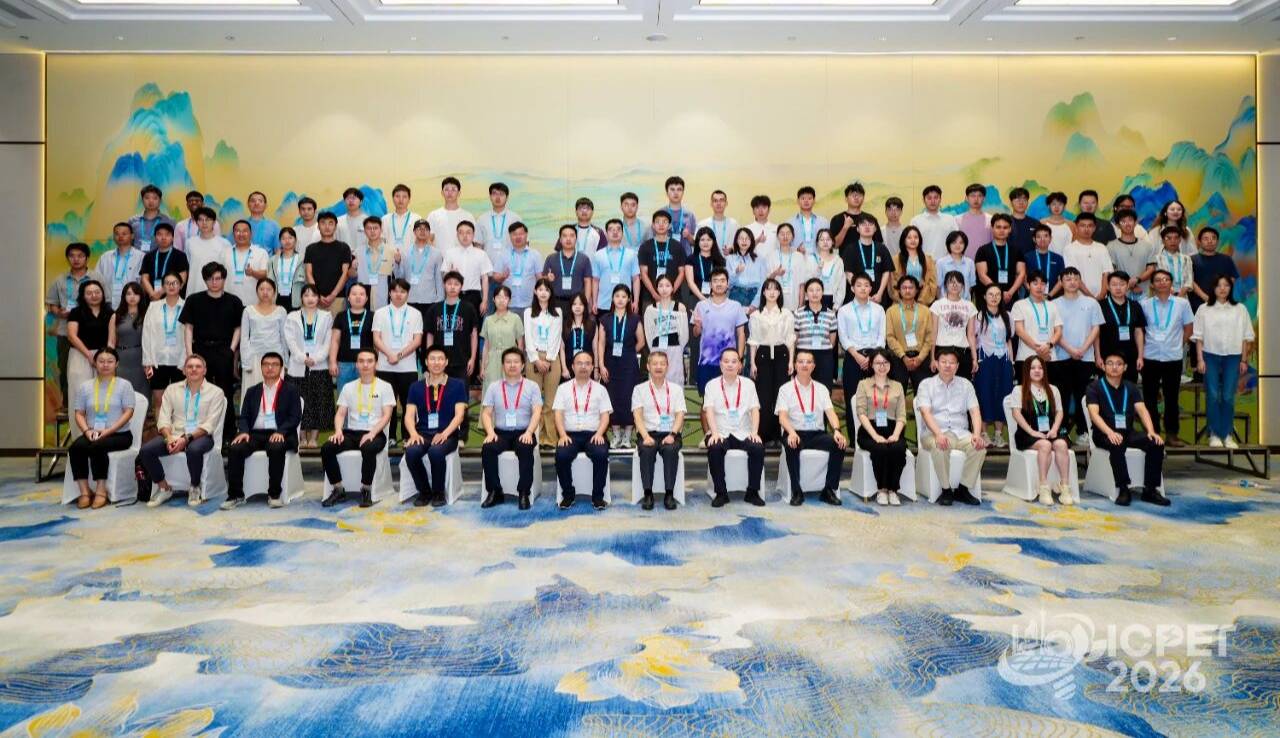
第八届电力与能源技术国际会议(ICPET 2026)在蓉开幕
- 258
- 发布时间:2026.07.30

饶毅、倪忆两位教授发文澄清:四位北大教师为王虹赴法留学撰写推荐信
- 460
- 发布时间:2026.07.29
近期会议

EI Compendex,Scopus
2027年第十一届机器学习与软计算国际会议(ICMLSC 2026)
时间:2027.01.29 - 2027.01.31
地点:日本 东京
截稿时间:2026.09.30

EI Compendex,Scopus
2027年第11届能源经济与能源政策国际会议 (ICEEEP 2027)
时间:2027.04.09 - 2027.04.11
地点:西班牙 波尔图
截稿时间:2026.11.10

EI Compendex,Scopus
2027年第十二届清洁能源研究进展国际会议 (ICACER 2027)
时间:2027.04.09 - 2027.04.11
地点:西班牙 波尔图
截稿时间:2026.11.10