
一、收到Revision通知:这是好消息
首先明确一点:
无论是Major Revision还是Minor Revision,都意味着编辑认为你的论文有发表价值,只是需要进一步完善。这本质上是一个积极信号。
各结果的录用概率参考:
| 审稿结果 | 最终录用概率 | 说明 |
|---|---|---|
| Accept(直接录用) | ~100% | 极少见,恭喜 |
| Minor Revision(小修) | ~90-95% | 按要求改完几乎必录 |
| Major Revision(大修) | ~50-70% | 需认真对待,仍有被拒风险 |
| Reject and Resubmit | ~30-40% | 需大幅修改重新审稿 |
| Reject(拒稿) | 0% | 本轮无机会 |
二、Major Revision vs Minor Revision:核心区别
| 维度 | Minor Revision(小修) | Major Revision(大修) |
|---|---|---|
| 修改幅度 | 小范围修改,不涉及核心内容 | 较大幅度修改,可能涉及方法/实验 |
| 典型要求 | 语言润色、补充文献、小幅实验补充 | 补充核心实验、修正方法缺陷、重新分析数据 |
| 修改时间 | 通常1-4周 | 通常1-3个月 |
| 是否再次送审 | 通常不再送外审,编辑直接判断 | 通常再次送审(可能同一批或新审稿人) |
| 被拒风险 | 极低(<5-10%) | 存在(~30-50%仍可能被拒) |
| 修改轮次 | 通常一轮即可 | 可能经历2-3轮修改 |
| 编辑期望 | 逐条落实即可通过 | 需展示实质性改进 |
2.1 Minor Revision常见要求
- 修正语法/拼写错误
- 补充1-2篇参考文献
- 改善某段表述的清晰度
- 添加一个小的补充实验或说明
- 调整图表格式或标注
- 补充方法细节描述
2.2 Major Revision常见要求
- 补充关键对比实验或新数据集验证
- 修正方法中的技术问题
- 重新组织论文结构
- 补充理论分析或证明
- 回应对新颖性/贡献的质疑
- 大幅扩展实验部分
- 增加消融实验验证各模块贡献
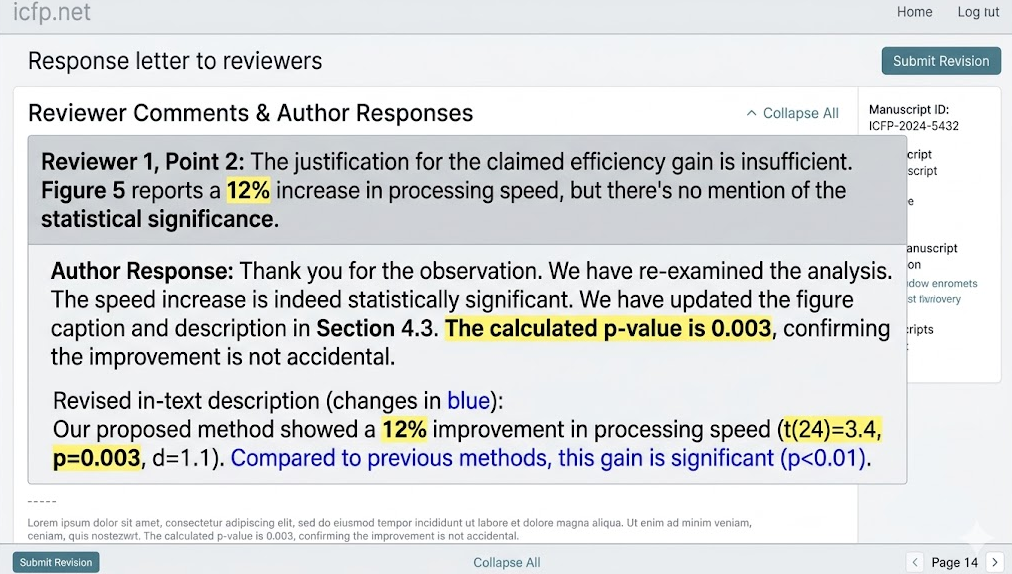
三、收到Revision后的标准操作流程
Day 1-3:仔细阅读所有审稿意见,不急于动手
    |
Day 3-5:逐条分类意见(必须改/可以改/不合理)
    |
Day 5-7:制定修改计划,与合作者讨论
    |
Week 2-6:执行修改(补实验/改写/补分析)
    |
Week 6-8:撰写Response Letter
    |
Week 8-9:合作者审阅Response + 修改稿
    |
提交前2天:最终检查(格式/一致性/完整性)
    |
在截止日前提交:修改稿 + Response Letter + 标注版
四、Response Letter的标准格式
4.1 整体结构
[封面/开头]
致谢编辑和审稿人 + 修改概述

[Reviewer 1的回复]
逐条回应每个意见

[Reviewer 2的回复]
逐条回应每个意见

[Reviewer 3的回复(如有)]
逐条回应每个意见

[Editor Comments的回复(如有)]
回应编辑的额外要求
4.2 逐条回复的标准格式
————————————————————————————
Reviewer #1, Comment 1:
————————————————————————————

[原文引用审稿人的意见,用斜体或引用格式]
"The authors should provide more experiments on Dataset X
to demonstrate the generalizability of the method."

Response:

We thank the reviewer for this constructive suggestion.
We have conducted additional experiments on Dataset X as
requested. The results are presented in the revised
manuscript (Section 4.3, Table 5, Page 9).

[展示新结果]

| Method | Dataset X - Acc | Dataset X - F1 |
|--------|----------------|----------------|
| Baseline A | 82.3 | 79.1 |
| Baseline B | 84.7 | 81.5 |
| Ours | **88.2** | **85.6** |

These results confirm that our method generalizes well
to Dataset X, outperforming baselines by +3.5% on accuracy.

Changes in manuscript: Section 4.3, Table 5 (Page 9, Lines 234-251)
————————————————————————————
4.3 格式要点
| 要素 | 说明 |
|---|---|
| 审稿人原文 | 用斜体/粗体/引用框突出,与你的回复区分 |
| 回复正文 | 正常字体,简洁明了 |
| 修改位置标注 | 指明具体在哪一节/哪一页/哪几行 |
| 新增数据 | 用表格或关键数字展示 |
| 颜色标注(可选) | 部分期刊要求在修改稿中用红色/蓝色标注修改处 |
五、Response Letter英文完整模板
Dear Editor and Reviewers,

Thank you for the constructive comments and suggestions on
our manuscript entitled "[Paper Title]" (Manuscript ID: XXXX).

We have carefully revised the manuscript according to all
comments and suggestions from the reviewers. Below we
provide a detailed point-by-point response to each comment.
All modifications in the revised manuscript are highlighted
in blue for easy identification.

We believe the revised manuscript has been significantly
improved and hope it now meets the standards for publication
in [Journal Name].

================================================================
RESPONSE TO REVIEWER #1
================================================================

Comment 1.1:
"[审稿人原文意见]"

Response:
We thank the reviewer for this comment. [你的回复].
The corresponding revision can be found in [Section X,
Page Y, Lines Z1-Z2] of the revised manuscript.

---

Comment 1.2:
"[审稿人原文意见]"

Response:
[你的回复]

Changes: [修改位置]

---

[继续逐条...]

================================================================
RESPONSE TO REVIEWER #2
================================================================

Comment 2.1:
"[审稿人原文意见]"

Response:
[你的回复]

---

[继续逐条...]

================================================================
RESPONSE TO EDITOR
================================================================

[如果编辑有额外意见,在此回复]

================================================================

We hope that the revised manuscript and our responses
adequately address all the concerns raised by the reviewers.
We are grateful for the opportunity to improve our work
and look forward to your favorable decision.

Sincerely,
[Corresponding Author Name]
On behalf of all authors
六、不同类型意见的回复策略
6.1 要求补充实验
Comment: "More experiments on [X] are needed."

Response:
We appreciate this suggestion. We have conducted the
requested experiments. The new results are presented in
Table X (Page Y):

[插入结果表格]

Key findings: [1-2句总结新发现]

Changes: Added Table X and corresponding discussion in
Section Y (Page Z, Lines A-B).
6.2 质疑方法/技术问题
Comment: "The assumption in Eq. (3) may not hold when [condition]."

Response:
We thank the reviewer for this insightful observation.
We acknowledge that [condition] is a valid concern.

To address this, we have:
1. Added a discussion of when this assumption holds
   (Section 3.2, Paragraph 2)
2. Conducted experiments under [condition] to verify
   robustness (Table X, "Condition Y" row)
3. Added a limitation discussion in Section 5

Results show that even when [condition], our method
maintains [X]% of its performance advantage.

Changes: Section 3.2 (Page X), Table Y, Section 5 (Page Z).
6.3 要求改善写作
Comment: "Section 3 is hard to follow."

Response:
We apologize for the confusion. We have substantially
rewritten Section 3 to improve clarity:

1. Added a method overview paragraph at the beginning
2. Included Figure X as a visual pipeline illustration
3. Reorganized subsections in a more logical order
4. Clarified notation (Table 1 now lists all symbols)

Changes: Section 3 has been restructured (Pages X-Y).
6.4 审稿人误读了你的论文
Comment: "The method requires labeled data at test time,
which is impractical."

Response:
We appreciate the chance to clarify this point. Our method
does NOT require labeled data at test time. As described in
Section 3.1 (revised Page X, Lines Y-Z): "[引用修改后的
明确表述]".

Labels are used only during training (Stage 1). At inference,
the model requires only [input description].

We acknowledge that this was not sufficiently clear in the
original submission. We have added an explicit paragraph
(Section 3.4, "Inference Procedure") to prevent this
confusion.

Changes: Added Section 3.4 (Page X, Lines Y-Z).
6.5 对新颖性的质疑
Comment: "The contribution seems incremental over [Prior Work]."

Response:
We respectfully address this concern. While our work builds
upon [Prior Work], the key differences are substantial:

| Aspect | [Prior Work] | Ours |
|--------|-------------|------|
| [Dim 1] | [Their approach] | [Our different approach] |
| [Dim 2] | [Their limit] | [Our solution] |
| [Dim 3] | [Their result] | [Our improvement] |

We have expanded the discussion of these differences in
Section 2 (Related Work) and added a dedicated comparison
paragraph in Section 1 (Introduction).

Furthermore, the performance gap (+X.X%) demonstrates that
these differences translate to meaningful practical improvements.

Changes: Section 1 (Page X), Section 2 (Page Y, new paragraph).
6.6 无法完全满足的要求
Comment: "The authors should evaluate on [extremely large
dataset] which requires [unreasonable resources]."

Response:
We thank the reviewer for this suggestion. While we agree
that evaluation on [dataset] would be valuable, this is
unfortunately beyond our current computational resources
([explain constraint briefly]).

As an alternative, we have:
1. Evaluated on [similar but feasible dataset] which shares
   key characteristics with [requested dataset]
2. Added a scalability analysis (Figure X) showing
   performance trends as data size increases

We have also noted this as a direction for future work
(Section 6, Page X).

Changes: Added [feasible dataset] results in Table Y;
scalability analysis in Figure Z; future work note in Section 6.
七、提交修改稿的完整材料
| 材料 | 说明 | 是否必须 |
|---|---|---|
| 修改后的论文(Clean版) | 最终版本,无标注 | 必须 |
| 修改后的论文(标注版) | 修改处用颜色/删除线标注 | 多数期刊要求 |
| Response Letter | 逐条回复审稿意见 | 必须 |
| Cover Letter(修改版) | 简短说明已完成修改 | 部分期刊要求 |
| 补充材料(如有新增) | 新增的附录/代码/数据 | 视情况 |
标注版的制作方法:
- LaTeX:使用
latexdiff工具自动对比生成latexdiff old.tex new.tex > diff.tex - Word:使用"审阅"→"比较文档"功能
- 手动:修改处用蓝色/红色标注
八、时间管理与注意事项
8.1 修改时间限制
| 类型 | 通常期限 | 能否延期 |
|---|---|---|
| Minor Revision | 2-4周 | 一般不需要延期 |
| Major Revision | 1-3个月 | 可邮件申请延期(合理理由) |
| 超过期限未提交 | 可能被视为撤稿 | 务必在截止前联系编辑 |
8.2 申请延期的邮件模板
Subject: Request for Extension - Manuscript ID: XXXX

Dear Editor,

I am writing regarding the revision of our manuscript
(ID: XXXX) entitled "[Title]."

We are making good progress on the revisions. However,
due to [legitimate reason: additional experiments require
more time / collaborator availability / equipment access],
we kindly request an extension of [X weeks] beyond the
current deadline of [date].

We anticipate submitting the revised manuscript by [new date].

Thank you for your understanding.

Sincerely,
[Name]
8.3 修改过程中的注意事项
| 注意 | 说明 |
|---|---|
| 不要只改审稿人指出的问题 | 趁机改善全文质量 |
| 不要引入大量新内容偏离原文 | 可能引发新质疑 |
| 不要删除审稿人肯定的内容 | 保留优势部分 |
| 修改后通读全文确保一致性 | 补充内容与原文衔接自然 |
| 数字/数据前后一致 | Response中引用的数字与论文一致 |
| 格式保持不变 | 不要趁修改时换模板/改格式 |
九、10个高频错误
| 序号 | 错误 | 正确做法 |
|---|---|---|
| 1 | 遗漏某条意见未回复 | 逐条回复,一条不落 |
| 2 | Response中的数据与论文不一致 | 确保完全同步 |
| 3 | 只说"已修改"不说在哪里 | 标注具体页码/行号 |
| 4 | 态度傲慢/攻击审稿人 | 全程礼貌专业 |
| 5 | 承诺修改但论文中实际未改 | 说到做到 |
| 6 | 标注版遗漏了部分修改 | 用工具自动生成diff |
| 7 | 超过修改期限未联系编辑 | 提前申请延期 |
| 8 | Minor Revision也拖很久 | 小修应快速完成(1-2周) |
| 9 | 修改幅度与审稿意见不匹配 | Major要展示实质改进 |
| 10 | 忘记更新图表编号/引用 | 通读全文检查一致性 |
十、总结
Minor Revision: 编辑基本决定录用,你需要做的是"按清单完成任务"。快速、准确、逐条落实即可。不要拖延,1-2周内完成最佳。
Major Revision: 编辑给了一次机会但需要说服力。你需要展示"论文确实变好了"——补充关键实验、修正技术问题、改善表达。认真对待,它仍可能变成Reject。
Response Letter核心原则:
- 逐条回复,不遗漏
- 先感谢,后回答
- 用证据(数据/实验/引用)而非辩论
- 标注修改位置(页码+行号)
- 合理承认不足,展示改进诚意
最终心态: Revision是编辑伸出的橄榄枝。认真修改、专业回复,就是把这根橄榄枝变成录用通知书的最佳路径。
上一篇
CMT/EasyChair/OpenReview投稿系统操作指南与常见报错解决方法
热门头条

2026年科学探索奖获奖名单公布
- 19
- 发布时间:2026.08.24
第十九届前沿计算机理论与工程国际会议(ICACTE 2026)在杭州举行
- 13
- 发布时间:2026.08.24
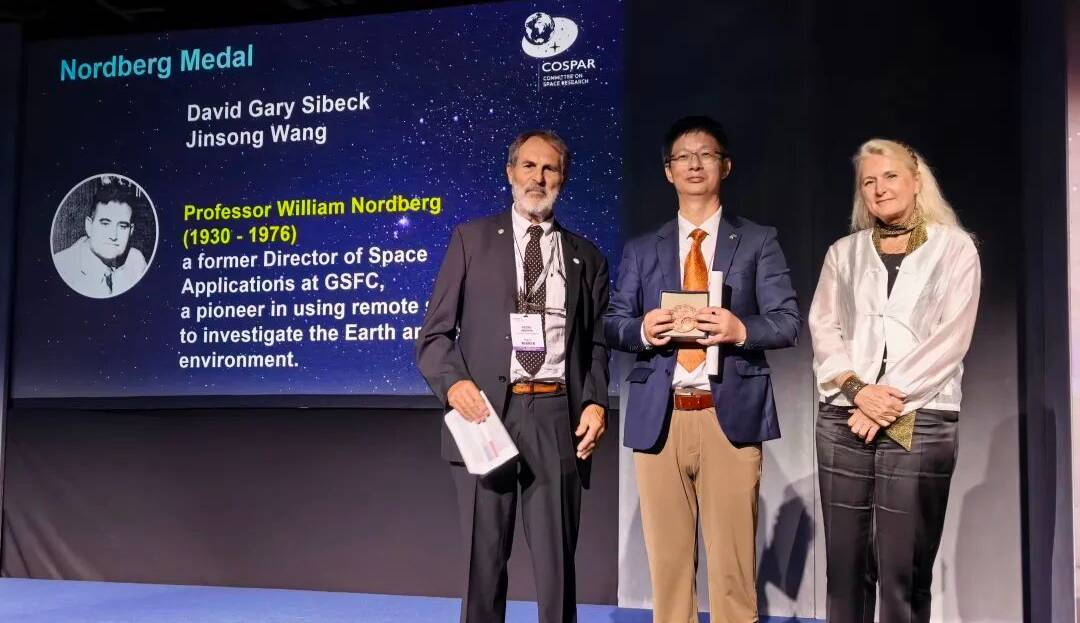
中国首位!新晋院士候选人,获国际大奖
- 174
- 发布时间:2026.08.06
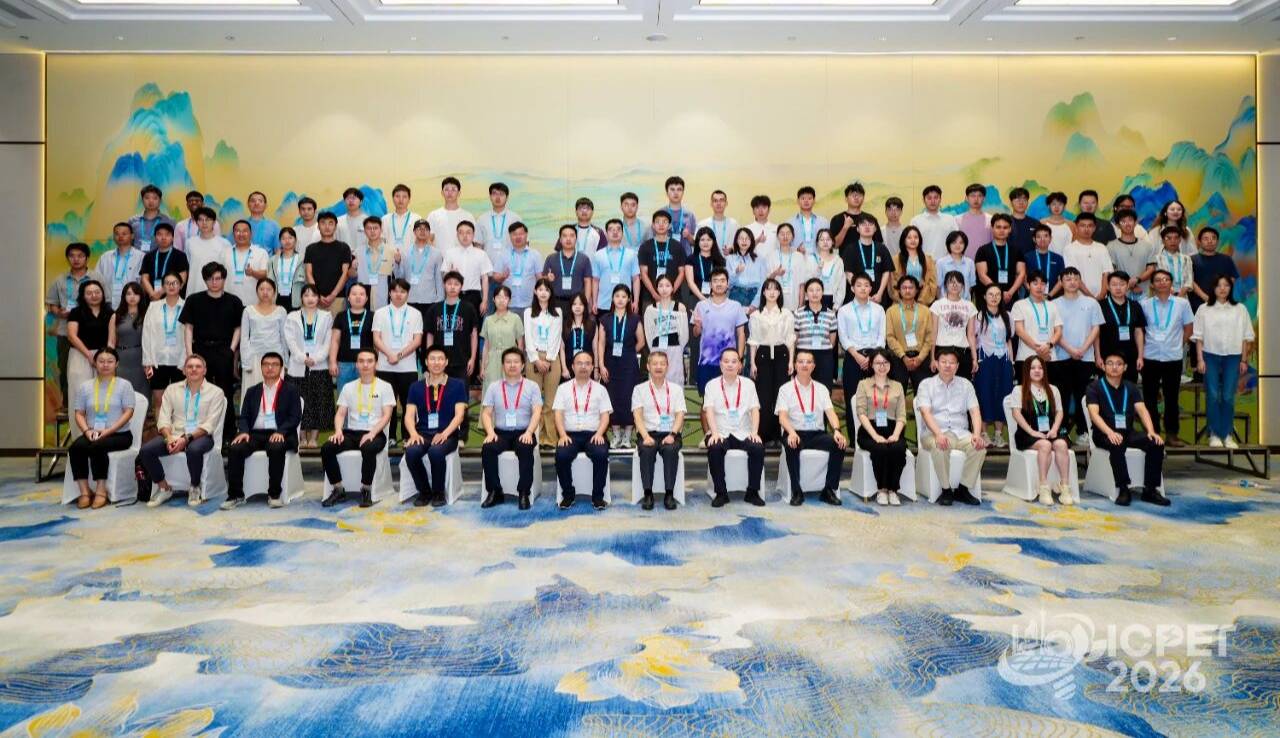
第八届电力与能源技术国际会议(ICPET 2026)在蓉开幕
- 258
- 发布时间:2026.07.30

饶毅、倪忆两位教授发文澄清:四位北大教师为王虹赴法留学撰写推荐信
- 460
- 发布时间:2026.07.29
近期会议

EI Compendex,Scopus
2027年第十一届机器学习与软计算国际会议(ICMLSC 2026)
时间:2027.01.29 - 2027.01.31
地点:日本 东京
截稿时间:2026.09.30

EI Compendex,Scopus
2027年第11届能源经济与能源政策国际会议 (ICEEEP 2027)
时间:2027.04.09 - 2027.04.11
地点:西班牙 波尔图
截稿时间:2026.11.10

EI Compendex,Scopus
2027年第十二届清洁能源研究进展国际会议 (ICACER 2027)
时间:2027.04.09 - 2027.04.11
地点:西班牙 波尔图
截稿时间:2026.11.10